Loreal Age Perfect Cell Renewal Night Cream Reviews
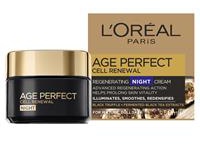
Historic period Perfect Prison cell Renewal Night Cream
The 50'Oréal Laboratories have combined an exclusive circuitous of ii active ingredients rich in Polyphenols and Vitamin B into a cell regenerating night foam which promotes overnight cellular renewal.
Uploaded by: annan on
Ingredients overview
Aqua/Water, Paraffinum Liquidum/Mineral Oil, Glycerin, Dimethicone, Squalane, Glyceryl Stearate, Cetyl Alcohol, PEG-40 Stearate, Sorbitan Tristearate, Cera Alba / Beeswax, Tuber Aestivum Extract, Mel/Honey, Cera Microcristallina/Microcrystalline Wax, Alkane series, Isobutane, Sorbitan Oleate, Saccharomyces/Xylinum/Black Tea Ferment, Calcium Pantothenate, Tuber Melanosporum Excerpt, Dimethyl Isosorbide, Neohesperidin Dihydrochalcone, Isohexadecane, Sodium Citrate, Sodium Cocoyl Glutamate, Sodium Hydroxide, Cyclodextrin, Vigna Aconitifolia Seed Extract, Mannitol, Disodium EDTA, Disodium Succinate, Propylene Glycol, Hydrolyzed Cicer Seed Excerpt, Hydroxyethylcellulose, Capryloyl Salicylic Acid, Citric Acid, Biotin, Faex Extract/Yeast Extract, Polysorbate lxxx, Acrylamide/Sodium Acryloyldimethyltaurate Copolymer, Acrylonitrile/Methyl Methacrylate/Vinylidene Chloride Copolymer, Octyldodecanol, Oryzanol, BHT, Tocopheryl Acetate, Pentaerythrityl Tetra-Di-T-Butyl Hydroxyhydrocinnamate, Potassium Sorbate, Sodium Benzoate, Sodium Salicylate, Phenoxyethanol, Chlorphenesin, Ci 14700 / Red 4, Ci 19140/Yellow v, Linalool, Geraniol, Alpha-Isomethyl Ionone, Limonene, Hydroxycitronellal, Citronellol, Hexyl Cinnamal, Benzyl Booze, Benzyl Salicylate, Parfum/Fragrance
Highlights
Central Ingredients
Other Ingredients
Perfuming: Cera Alba / Beeswax, Paraffin, Neohesperidin Dihydrochalcone, Octyldodecanol, Linalool, Geraniol, Blastoff-Isomethyl Ionone, Limonene, Hydroxycitronellal, Citronellol, Hexyl Cinnamal, Benzyl Alcohol, Benzyl Salicylate, Parfum/Fragrance
Skim through
| Ingredient name | what-it-does | irr., com. | ID-Rating |
|---|---|---|---|
| Aqua/Water | solvent | ||
| Paraffinum Liquidum/Mineral Oil | emollient, solvent | 0, 0-2 | |
| Glycerin | peel-identical ingredient, moisturizer/humectant | 0, 0 | superstar |
| Dimethicone | emollient | 0, 1 | |
| Squalane | skin-identical ingredient, emollient | 0, 1 | goodie |
| Glyceryl Stearate | emollient, emulsifying | 0, one-2 | |
| Cetyl Alcohol | emollient, viscosity controlling | ii, two | |
| PEG-40 Stearate | emulsifying, surfactant/cleansing | ||
| Sorbitan Tristearate | emulsifying | ||
| Cera Alba / Beeswax | emollient, viscosity controlling, emulsifying, perfuming | 0, 0-2 | |
| Tuber Aestivum Extract | |||
| Mel/Honey | soothing, moisturizer/humectant, antimicrobial/antibacterial | goodie | |
| Cera Microcristallina/Microcrystalline Wax | viscosity controlling | ||
| Paraffin | viscosity controlling, perfuming | ||
| Isobutane | |||
| Sorbitan Oleate | emulsifying | 0, 3 | |
| Saccharomyces/Xylinum/Blackness Tea Ferment | |||
| Calcium Pantothenate | |||
| Tuber Melanosporum Extract | moisturizer/humectant | goodie | |
| Dimethyl Isosorbide | solvent, viscosity decision-making | ||
| Neohesperidin Dihydrochalcone | perfuming | ||
| Isohexadecane | emollient, solvent | ||
| Sodium Citrate | chelating, buffering | ||
| Sodium Cocoyl Glutamate | surfactant/cleansing | ||
| Sodium Hydroxide | buffering | ||
| Cyclodextrin | chelating | ||
| Vigna Aconitifolia Seed Extract | |||
| Mannitol | moisturizer/humectant | goodie | |
| Disodium EDTA | chelating | ||
| Disodium Succinate | surfactant/cleansing | ||
| Propylene Glycol | moisturizer/humectant, solvent, viscosity controlling | 0, 0 | |
| Hydrolyzed Cicer Seed Extract | |||
| Hydroxyethylcellulose | viscosity controlling | ||
| Capryloyl Salicylic Acid | exfoliant | goodie | |
| Citric Acid | buffering | ||
| Biotin | |||
| Faex Extract/Yeast Extract | moisturizer/humectant | goodie | |
| Polysorbate fourscore | emulsifying, surfactant/cleansing | 0, 0 | |
| Acrylamide/Sodium Acryloyldimethyltaurate Copolymer | viscosity controlling | ||
| Acrylonitrile/Methyl Methacrylate/Vinylidene Chloride Copolymer | |||
| Octyldodecanol | emollient, perfuming | ||
| Oryzanol | antioxidant | goodie | |
| BHT | antioxidant, preservative | ||
| Tocopheryl Acetate | antioxidant | 0, 0 | |
| Pentaerythrityl Tetra-Di-T-Butyl Hydroxyhydrocinnamate | antioxidant, preservative | ||
| Potassium Sorbate | preservative | ||
| Sodium Benzoate | preservative | ||
| Sodium Salicylate | preservative | ||
| Phenoxyethanol | preservative | ||
| Chlorphenesin | preservative, antimicrobial/antibacterial | ||
| Ci 14700 / Red 4 | colorant | ||
| Ci 19140/Yellow 5 | colorant | ||
| Linalool | perfuming | icky | |
| Geraniol | perfuming | icky | |
| Alpha-Isomethyl Ionone | perfuming | icky | |
| Limonene | perfuming, solvent | icky | |
| Hydroxycitronellal | perfuming | icky | |
| Citronellol | perfuming | icky | |
| Hexyl Cinnamal | perfuming | icky | |
| Benzyl Alcohol | preservative, perfuming, solvent, viscosity decision-making | ||
| Benzyl Salicylate | perfuming | icky | |
| Parfum/Fragrance | perfuming | icky |
L'Oreal Paris Age Perfect Prison cell Renewal Night Cream
Ingredients explainedAs well-called: Aqua;Water | What-information technology-does: solvent
Practiced quondam h2o, aka H2O. The most common skincare ingredient of all. Y'all can usually notice information technology right in the very outset spot of the ingredient list, meaning it's the biggest thing out of all the stuff that makes up the product.
Information technology's mainly a solvent for ingredients that do not like to dissolve in oils but rather in h2o.
One time inside the skin, information technology hydrates, but not from the outside - putting pure water on the skin (how-do-you-do long baths!) is drying.
Ane more thing: the water used in cosmetics is purified and deionized (information technology ways that almost all of the mineral ions inside it is removed). Like this, the products can stay more than stable over time.
Also-called: Mineral Oil;Paraffinum Liquidum | What-information technology-does: emollient, solvent | Irritancy: 0 | Comedogenicity: 0-2
The famous or maybe rather infamous mineral oil. The clear oily liquid that is the "cheap by-product" of refining crude oil and the ane that gets a lot of rut for its poor provenance. It is a very controversial ingredient with pros and cons and plenty of myths around it. So let us see them:
The pros of mineral oil
Trust u.s., if something is used for more than 100 years in cosmetic products, information technology has advantages. Chemically speaking, cosmetic grade mineral oil is a complex mixture of highly refined saturated hydrocarbons with C15-fifty chain length. It is not merely a "by-product" but rather a specifically isolated part of petroleum that is very pure and inert.
It is a great emollient and moisturizer working mainly by occlusivity. Occlusivity is i of the basic mechanisms of how moisturizers work and it ways that mineral oil sits on top of the skin and hinders and then-chosen trans-epidermal water loss, i.e water evaporating out of your skin. When compared to heavy-duty found oil, actress virgin coconut oil, the two of them were as efficient and safety as moisturizers in treating xerosis, a peel condition continued to very dry skin.
The other thing that mineral oil is really good at is being non-irritating to the skin. The chemical limerick of found oils is more complex with many more possible allergens or irritating components, while mineral oil is simple, pure and sensitivity to it is extremely rare. If you cheque out the archetype French chemist's shop brands and their moisturizers for the most sensitive, allergy decumbent skin, they unremarkably incorporate mineral oil. This is no coincidence.
The cons of mineral oil
The pros of mineral oil can be interpreted equally cons if we look at them from some other perspective. Not penetrating the skin but mostly merely sitting on height of it and not containing biologically active components, similar nice fatty acids and vitamins mean that mineral oil does not "nourish" the peel in the way institute oils do. Mineral oil does not give the pare whatever extra goodness, it is simply a not-irritating moisturizer working mainly by occlusivity.
The myths effectually mineral oil
Badmouthing mineral oil is a favorite sport of many, it is a cheap textile and being connected to petrolatum makes it adequately like shooting fish in a barrel to demonize.
While it is truthful that industrial grade mineral oil contains carcinogenic components (and so-chosen polycyclic compounds), these are completely removed from corrective and food course mineral oil and in that location is no scientific information showing that the pure, cosmetic class version is carcinogenic.
What is more, in terms of the full general health effects of mineral oils used in cosmetics, a 2017 report reviewed the data on their skin penetration and concluded that "the cosmetic use of mineral oils and waxes does not present a risk to consumers due to a lack of systemic exposure."
Another super common myth surrounding mineral oil is that it is comedogenic. A 2005 study titled "Is mineral oil comedogenic?" examined this very question and guess what happened? The study concluded that "based on the animal and human information reported, along with the AAD recommendation, it would appear reasonable to conclude that mineral oil is noncomedogenic in humans."
Overall, nosotros experience that the scaremongering around mineral oil is not justified. For dry out and super-sensitive skin types it is a cracking option. However, if yous do not like its origin or its heavy feeling or annihilation else about it, avoiding it has never been easier. Mineral oil has such a bad reputation nowadays that cosmetic companies hardly dare to use information technology anymore.
- A natural moisturizer that's also in our skin
- A super common, prophylactic, constructive and inexpensive molecule used for more than 50 years
- Not only a simple moisturizer simply knows much more: keeps the pare lipids betwixt our peel cells in a healthy (liquid crystal) state, protects confronting irritation, helps to restore barrier
- Constructive from as low every bit 3% with even more benefits at higher concentrations up to 20-40% (around 10% is a good usability-effectiveness sweet spot)
- Loftier-glycerin moisturizers are awesome for treating severely dry out skin
Read all the geeky details nigh Glycerin here >>
What-it-does: emollient | Irritancy: 0
Probably themost common silicone of all. It is a polymer (created from repeating subunits) molecule and has different molecular weight and thus unlike viscosity versions from water-light to thick liquid.
As for skincare, it makes the pare silky smooth, creates a subtle gloss and forms a protective bulwark (aka occlusive). Also, works well to fill in fine lines and wrinkles and give pare a plump await (of form that is only temporary, but withal, it'southward overnice). At that place are also scar handling gels out there using dimethicone as their base of operations ingredient. It helps to soften scars and increase their elasticity.
As for hair care, it is a not-volatile silicone pregnant that it stays on the pilus rather than evaporates from it andsmoothes the hair like no other matter. Depending on your hair type, information technology can bea bit difficult to wash out and might cause some build-up (btw, this is not true to all silicones, just the non-volatile types).
It seems to the states that squalane is in fashion and there is a reason for it. Chemically speaking, it is a saturated (no double bonds) hydrocarbon (a molecule consisting only of carbon and hydrogen), meaning that information technology'due south a nice and stable oily liquid with a long shelf life.
It occurs naturally in sure fish and plant oils (e.g. olive), and in the sebum (the oily stuff our skin produces) of the human pare. Every bit f.c. puts it in his awesome blog mail service, squalane'south main things are "emolliency , surface occlusion, and TEWL prevention all with extreme cosmetic elegance". In other words, it'south a superb moisturizer that makes your skin nice and smooth, without being heavy or greasy.
Another advantage of squalane is that it is pretty much uniform with all skin types and skin conditions. It is fantabulous for acne-decumbent skin and safe to employ even if you have fungi-related peel bug, like seborrhea or fungal acne.
The unsaturated (with double bonds) and hence less stable version of Squalane is Squalene, you can read about it here >>
A super common, waxy, white, solid stuff that helps water and oil to mix together, gives torso to creams and leaves the skin feeling soft and shine.
Chemically speaking, it is the attachment of a glycerin molecule to the fatty acid chosen stearic acid. It can be produced from virtually vegetable oils (in oils three fatty acid molecules are attached to glycerin instead of simply one like here) in a pretty unproblematic, "green" process that is similar to soap making. Information technology'south readily biodegradable.
Information technology too occurs naturally in our body and is used as a nutrient additive. As cosmetic chemist Colins writes it, "its safety really is beyond whatsoever doubt".
A so-called fatty (the practiced, not-drying kind of) booze that does all kinds of things in a skincare product: it makes your pare feel smoothen and overnice (emollient), helps to thicken up products and too helps water and oil to alloy (emulsifier). Can be derived from coconut or palm kernel oil.
A mutualwater-loving surfactant and emulsifier that helps to continue h2o and oil mixed nicely together.
 We don't have clarification for this ingredient yet.
It's the xanthous, solid stuff that you probably know from beeswax candles. Information technology'south a natural textile produced by dearest bees to build their honeycomb.
As for skincare, it'southward used as an emollient and thickening agent. Information technology's super mutual in lip balms and lipsticks.
We don't have description for this ingredient yet.
Nosotros all know dear as the sweet, gooey stuff that is lovely to sweeten a skillful loving cup of tea and we accept expert news near putting honey all over our pare. It is just as lovely on the peel every bit it is in the tea.
The great review article about honey in the Journal of Corrective Dermatology writes that it is arguably the oldest skincare ingredient and evidence from around 4500 BC mentions honey in some eye cream recipes. Chemically speaking, it is a bee-derived, supersaturated sugar solution. About95%of dear dry out weight is sugar and the other 5% consists of a great number of other minor components including proteins, amino acids, vitamins, enzymes, and minerals.
This unique and complex chemical limerick gives honey a bunch of squeamish peel intendance backdrop: information technology is very moisturizing, has soothing and antioxidant abilities equally well as significant antibacterial and antifungal magic powers. There is as well a lot of empirical evidence with emerging scientific backup that honey dressing promotes the healing of wounds and burns.
One catchy affair about honey though, is that it can have lots of unlike floral sources and different types of dear have a somewhat different composition and thus somewhat different backdrop. For example, the darker the dearest the richer it is in antioxidant phenolic compounds. Two special types of honey are acacia and manuka. The former is unique and popular because of its higher than usual fructose content that makes information technology more water-soluble and easier to stabilize in cosmetic formulas. The latter comes from the Leptospermum Scoparium tree native to New Zeland and its special thing is its actress strong antibacterial ability due to a unique component called methylglyoxal.
Overall, honey is a existent skin-goodie in pretty much every shape and form, and it is a nice one to spot on the ingredient list.
Nosotros don't have clarification for this ingredient yet.
We don't take description for this ingredient still.
A colorless gas used as apropellant in cosmetic products that come in a spray form. Chemically, information technology is an isomer of butane (same number of C and H atoms), merely while butane has a straight chain structure, isobutane is branched.
What-it-does: emulsifying | Irritancy: 0 | Comedogenicity: iii
A mainly oil-loving, vegetable raw material based ingredient that helps water and oil to mix together, aka emulsifier. It tin can also part every bit a wetting and dispersing agent helping insoluble particles such as color pigments or inorganic sunscreens (zinc/titanium dioxide) to disperse prissy and even in liquids.
Chemically speaking, it comes from the zipper of sorbitan (a dehydrated sorbitol (sugar) molecule) with the unsaturated fatty acid Oleic Acid, that creates a partly water (the sorbitan part) and partly oil soluble (oleic part) molecule.
Also-chosen: NG Kombuchka
Nosotros don't take description for this ingredient however.
We don't have description for this ingredient yet.
If you are into fine dining, I am sure yous have seen blackness truffle being grated by the waiter on top of your food in a Micheline star restaurant. It'south one of the most expensive edible mushrooms in the world.
Equally for what it's doing in a corrective product, information technology'southward a cracking question and we cannot say that in that location are tons of great research papers out in that location giving a reliable reply. What we could find is a patent awarding claiming that a corrective product with black truffle extract can fight reactive oxygen species (aka antioxidant), it canimprove blood flow by expanding the capillary claret vessels and it can inhibit skin irritation.
Other tiny $.25 of infos we could slice togeather say that Tuber Melanosporum Extract works as a humectant (water-bounden) moisturizer or that it'due south good (merely not very good) as an antioxidant, anti-aging and anti-inflammatory amanuensis.
A little helper ingredient that can boost the operation and enhance the delivery of active ingredients in a formula. It can penetrate deep layers of the pare helping actives to practise the same.
It's especially useful to assist active ingredients for self-tanning (DHA), anti-acne or peel-whitening to penetrate deeper and work better.
Nosotros don't take clarification for this ingredient yet.
A calorie-free, velvety, unique pare feel liquid that is a adept solvent and also makes the skin feel nice and shine (aka emollient). It'south oft used in makeup products mixed with silicones to requite shine and skid to the product. It's also corking for cleansing dirt and oil from the skin besides as for taking off make-up.
A little helper ingredient that is used to accommodate the pH of the production. It also helps to keep products stay nice longer by neutralizing the metal ions in the formula (they ordinarily come from water).
A vegetable based co-surfactant that helps to create balmy cleansing formulas.
Also-called: lye | What-information technology-does: buffering
The unfancy name for it is lye. It's a solid white stuff that's very element of group i and used in small amounts to conform the pH of the product and get in just right.
For case, in instance of AHA or BHA exfoliants, the right pH is super-duper important, and pH adjusters similar sodium hydroxide are needed.
BTW, lye is not something new. It was already used by ancient Egyptians to help oil and fat magically plough into something else. Tin you guess what? Yes, information technology'southward lather. It still often shows up in the ingredient list of soaps and other cleansers.
Sodium hydroxide in itself is a potent skin irritant, but once it's reacted (as it is usually in skin intendance products, similar exfoliants) it is totally harmless.
We don't have description for this ingredient notwithstanding.
We don't have description for this ingredient all the same.
A blazon of carbohydrate molecule, that has water-binding backdrop and helps to go on your skin hydrated.
Super mutual lilliputian helper ingredient thathelps products to remain nice and stable for a longer time. Information technology does so past neutralizing the metallic ions in the formula (that usually become into there from water) that would otherwise cause some not so prissy changes.
It is typically used in tiny amounts, around 0.ane% or less.
We don't have description for this ingredient yet.
- It'southward a helper ingredient that improves the freeze-thaw stability of products
- It'southward also a solvent, humectant and to some extent a penetration enhancer
- It has a bad reputation amidst natural cosmetics advocates but cosmetic scientists and toxicology experts do non agree (read more in the geeky details section)
Read all the geeky details about Propylene Glycol here >>
Nosotros don't accept description for this ingredient yet.
A nice little helper ingredient that can thicken up corrective products and create beautiful gel formulas. It's derived from cellulose, the major component of the jail cell wall of green plants. It is compatible with almost co-ingredients and gives a very expert skid to the formulas.
Also-called: LHA | What-it-does: exfoliant
We don't have description for this ingredient yet.
Citric acid comes from citrus fruits and is an AHA. If these magic three letters don't tell you annihilation, click here and read our detailed description on glycolic acid, the most famous AHA.
So citric acid is an exfoliant, that tin - just like other AHAs - gently lift off the dead skin cells of your skin and go far more smooth and fresh.
There is also some inquiry showing that citric acid with regular use (recall iii months and xx% concentration) tin help sun-damaged skin, increment pare thickness and some nice hydrating things called glycosaminoglycans in the skin.
But according to a comparative study done in 1995, citric acid has less skin improving magic properties than glycolic or lactic acid. Probably that's why citric acid is commonly not used as an exfoliant but more every bit a helper ingredient in small amounts to accommodate the pH of a formulation.
Also-called: Vitamin H
Also called vitamin H, biotin is the main component of many enzymes in our torso. A overnice ingredient to take as a supplement for stronger nails and hair. When you do not accept it as a supplement its effects are a scrap more questionable only according to manufacturer info it cansmooth the skin and strengthen the hair.
You lot probably know yeast from the kitchen where you put it into milk with a little saccharide and then after a couple of minutes brownish bubbling course. That is the fungi fermenting the sugar.
As for skin care, yeast contains beta-glucan that is a great soothing ingredient and likewise a mild antioxidant. The yeast extract itself is a silky clear liquid that has some slap-up moisturizing, skin protecting and moving picture-forming backdrop on the skin.
A mutual little helper ingredient thathelps h2o and oil to mixtogether, aka emulsifier.
The number at the terminate refers to the oil-loving part and the bigger the number the more emulsifying ability it has. 20 is a weak emulsifier, rather called solubilizer used commonly in toners while 60 and lxxx are more mutual in serums and creams.
A kind of polymer (big molecule from repeated subunits) that helps to thicken upwards and stabilize products. It usually comes to the formula as office of some thickener circuitous. For instance, coupled with isohexadecane and polysorbate 80, the trio helps to create soft and supple textures.
Too-chosen: Expancel microspheres
Thermoplastic (a type of plastic that becomes moldable at higher temperatures and solidifies upon cooling) microspheres (tiny assurance) that are mostly used aslightweight fillers. As for cosmetics, nosotros have plant a patent from Living Proof that claimes a pilus spray composition with our microsphere to "surprisingly increase the book of hair".
Other than that, the L'Oreal group seems to like and use Acrylonitrile/Methyl Methacrylate/Vinylidene Chloride Copolymer as a hollow, gas-filled (probably filled with isobutane) microsphere as it improves the skin experience of aqueous gel formulas and makes them very comfortable and smooth.
A articulate, slightly yellow, odorless oil that's a very common, medium-spreading emollient. It makes the peel experience prissy and smooth and works in a broad range of formulas.
A biologically active component that can exist found in rice bran oil. It has natural antioxidant properties and can aid to stabilize other unstable institute oils. Interestingly, it also seems to possess some natural sunscreen abilities.
Information technology'south the acronym for Butylated Hydroxy Toluene. It'southward a common constructed antioxidant that'southward used as a preservative.
There is some controversy around BHT. It'southward non a new ingredient, it has been used both as a food and cosmetics additive since the 1970s. Plenty of studies tried to examine if it's a carcinogen or not. This Truth in Crumbling article details the situation and besides writes that all these studies examine BHT when taken orally.
As for cosmetics, the CIR (Cosmetic Ingredient Review) concluded that the amount of BHT used in cosmetic products is low (normally around 0.01-0.1%), it does not penetrate skin far enough to be absorbed into the bloodstream and it is safe to use in cosmetics.
Also-chosen: Vitamin E Acetate | What-information technology-does: antioxidant | Irritancy: 0
It's the nigh normally used version of pure vitamin Eastward in cosmetics. You can read all well-nigh the pure class here. This 1 is the so-called esterified version.
According to famous dermatologist, Leslie Baumann while tocopheryl acetate is more stable and has a longer shelf life, it's as well more poorly captivated past the skin and may not have the same crawly photoprotective furnishings every bit pure Vit E.
Pentaerythrityl Tetra-Di-T-Butyl Hydroxyhydrocinnamate is an antioxidant molecule used in small amounts (less than 0.8%) to help products stay squeamish longer. More specifically, information technology is neat at preventing discoloration or other types of oxidative degradation. Information technology is a trendy alternative to often bad-mouthed synthetic antioxidant and stabilizer, BHT.
It's one of those things that help your cosmetics not to go incorrect too soon, aka a preservative. It's not a strong ane and doesn't really work confronting bacteria, but more against mold and yeast. To practice that it has to break down to its active form, sorbic acid. For that to happen, at that place has to be h2o in the product and the right pH value (pH three-4).
But fifty-fifty if everything is correct, it's not plenty on its own. If you lot encounter potassium sorbate y'all should see some other preservative next to it too.
BTW, it'south besides a food preservative and even has an E number, E202.
A helper ingredient that helps to make the products stay nice longer, aka preservative. Information technology works mainly against fungi.
Information technology's pH dependent and works best at acidic pH levels (3-5). It's not strong plenty to exist used in itself then information technology'southward always combined with something else, often with potassium sorbate.
The sodium salt of salicylic acid. CosIng (the official European union corrective ingredient database) says that it's a preservative and helps to make the product taste bad (called denaturant), while some manufacturer claims that it has exfoliating properties and is antimicrobial. It'due south good to know, that the salt of an exfoliant is a neutralized form, and then if you want to go for exfoliation stick to the pure acrid.
It's pretty much the current Information technology-preservative. It's condom and gentle, but even more importantly, it'southward non a feared-past-everyone-by and large-without-scientific-reason paraben.
It's not something new: information technology was introduced effectually 1950 and today it tin exist used up to i% worldwide. It tin be found in nature - in light-green tea - but the version used in cosmetics is synthetic.
Other than having a good rubber profile and being quite gentle to the pare information technology has some other advantages likewise. It tin be used in many types of formulations as it has groovy thermal stability (tin can exist heated up to 85°C) and works on a broad range of pH levels (ph 3-ten).
It'southward often used together with ethylhexylglycerin every bit it nicely improves the preservative activity of phenoxyethanol.
A little helper ingredient that works every bit a preservative. It works confronting leaner and some species of fungi and yeast. Information technology'south often combined with IT-preservative, phenoxyethanol.
As well-called: Red 4;Ci 14700 | What-it-does: colorant
A common colorant that gives products a nice red colour.
Also-called: Tartrazine, Yellowish five;Ci 19140 | What-information technology-does: colorant
Ci 19140 or Tartrazine is a super mutual colorant in skincare, makeup, medicine & food. Information technology's a synthetic lemon yellow that'south used lone or mixed with other colors for special shades.
FDA says it's possible, but rare, to have an allergic-type reaction to a color additive. As an example, information technology mentions that Ci 19140 may cause itching and hives in some people only the colorant is e'er labeled and then that you lot tin can avoid it if you are sensitive.
Linalool is a super mutual fragrance ingredient. It's kind of everywhere - both in plants and in cosmetic products. It's part of 200 natural oils including lavender, ylang-ylang, bergamot, jasmine, geranium and information technology can exist establish in 90-95% of prestige perfumes on the market.
The problem with linalool is, that simply like limonene it oxidises on air exposure and becomes allergenic. That'south why a product containing linalool that has been opened for several months is more likely to be allergenic than a fresh i.
A report made in the UK with 483 people tested the allergic reaction to three% oxidised linalool and 2.3% had positive examination results.
Geraniol is a mutual fragrance ingredient. It smells like rose and can be found in rose oil or in small quantities in geranium, lemon and many other essential oils.
Just like other like fragrance ingredients (like linalool and limonene) geraniol likewise oxidises on air exposure and becomes allergenic. All-time to avoid if you lot take sensitive skin.
It's a common fragrance ingredient that is 1 of the "European union 26 fragrances" that has to be labelled separately (and cannot be simply included in the term "fragrance/perfume" on the label) because of allergen potential. Best to avoid if your peel is sensitive.
A supercommon and cheap fragrance ingredient. It'due south in many plants, e.g. rosemary, eucalyptus, lavender, lemongrass, peppermint and information technology'due south the main component (about 50-90%) of the peel oil of citrus fruits.
It does smell overnice but the problem is that information technology oxidizes on air exposure and the resulting stuff is not good for the skin. Oxidized limonene can cause allergic contact dermatitis and counts as a frequent peel sensitizer.
Limonene'south nr1 function is definitely beingness a fragrance component, but at that place are several studies showing that it's also a penetration enhancer, mainly for oil-loving components.
All in all, limonene has some pros and cons, but - peculiarly if your skin is sensitive - the cons probably outweigh the pros.
A common fragrance ingredient that has a sugariness odour somewhere betwixt lily and fruity melon. Can exist found in essential oils, such as lavender oil, orange flower oil or ylang-ylang.
In cosmetics, it tin be used upward to ane%. It's one of the "EU 26 fragrances" that has to be labelled separately (and cannot exist only included in the term "fragrance/perfume" on the characterization) because of allergen potential. Best to avoid if your skin is sensitive.
Citronellol is a very mutual fragrance ingredient with a prissy rose-similar scent. In the UK, it'south actually the third virtually oftentimes listed perfume on the ingredient lists.
It can exist naturally found in geranium oil (most thirty%) or rose oil (about 25%).
Equally with all fragrance ingredients, citronellol tin can also cause allergic contact dermatitis and should exist avoided if you lot have perfume allergy. In a 2001 worldwide study with 178 people with known sensitization to fragrances citronellol tested positive in 5.6% of the cases.
There is no known anti-aging or positive pare benefits of the ingredient. It'due south in our products to get in smell nice.
A common fragrance ingredient that smells like jasmine. It is one of the "EU 26 fragrances" that has to be labelled separately considering of allergen potential. Best to avert if your peel is sensitive.
It's i of those things that help your cosmetics non to get wrong likewise soon, aka a preservative. It tin can exist naturally found in fruits and teas simply can also exist made synthetically.
No matter the origin, in small amounts (up to ane%) it's a prissy, gentle preservative. Has to be combined with some other squeamish preservatives, like potassium sorbate to be broad spectrum plenty.
In loftier amounts, it can be a pare irritant, but don't worry, it's never used in loftier amounts.
It'southward a mutual fragrance ingredient that has a lite floral aroma. It'due south one of the "EU 26 fragrances" that has to be labelled separately (and cannot exist merely included in the term "fragrance/perfume" on the label) because of allergen potential. All-time to avert if your skin is sensitive.
Too-chosen: Fragrance, Parfum | What-it-does: perfuming
Exactly what it sounds: nice smelling stuff put into corrective products and so that the end product also smells prissy. Fragrance in the U.s. and parfum in the EU is a generic term on the ingredient list that is made up of thirty to l chemicals on average (but it can accept as much as 200 components!).
If you are someone who likes to know what yous put on your confront and so fragrance is non your all-time friend - there's no mode to know what's actually in it.
Also, if your skin is sensitive, fragrance is again not your best friend. It's the number one crusade of contact allergy to cosmetics. It's definitely a smart thing to avoid with sensitive pare (and fragrance of any type - natural is just as allergic as synthetic, if not worse!).
You may also want to take a expect at...
Normal (well kind of - information technology'southward purified and deionized) h2o. Commonly the chief solvent in cosmetic products. [more than] A articulate, oily liquid that comes from refining rough oil. Even though it is a highly controversial ingredient, the scientific consensus is that it is a condom, non-irritating and effective emollient and moisturizer working mainly by occlusivity. [more] A real oldie just a goodie. Peachy natural moisturizer and pare-identical ingredient that plays an important role in skin hydration and general skin health. [more] A very common silicone that gives both pare and hair a silky smoothen feel. It also forms a protective barrier on the peel and fills in fine lines. Likewise used for scar treatment. [more] An emollient and natural moisturizer that tin can be plant besides in the sebum (oily stuff our skin produces). It leaves a nice not-greasy, not-heavy feeling on the skin. [more than] Waxy, white, solid stuff that helps h2o and oil to mix together and leaves the pare feeling soft and smooth. [more] A fatty (the good, non-drying kind of) alcohol that makes your skin feel smooth and nice (emollient), helps to thicken up products and also helps water and oil to blend (emulsifier). A common water-loving surfactant and emulsifier that helps to go on water and oil mixed nicely together. The yellow solid stuff produced by dear bees to build their honeycomb. As for skincare, it's used equally an emollient and thickening agent. [more] The sweetness, gooey, carbohydrate-laden stuff with skin moisturizing, soothing, antibacterial and some antioxidant properties. [more] A colorless gas used equally a propellant in cosmetic products that come in a spray form. Chemically, it is an isomer of butane (same number of C and H atoms), only while butane has a straight concatenation structure, isobutane is branched. [more than] A mainly oil-loving, vegetable raw cloth based ingredient that helps water and oil to mix together, aka emulsifier. It can besides function every bit a wetting and dispersing amanuensis helping insoluble particles such as color pigments or inorganic sunscreens (zinc/titanium dioxide) to disperse nice and even in liquids. [more] A helper ingredient that can heave the performance and heighten the delivery of active ingredients. Information technology tin can penetrate deep layers of the skin helping actives to do the same. [more] A light, velvety, unique skin feel liquid that is a good solvent and also makes the skin feel prissy and smooth. [more than] A helper ingredient that is used to adjust the pH of the product. Also helps to keep products stay overnice longer by neutralizing the metal ions in the formula. A vegetable based co-surfactant that helps to create mild cleansing formulas. Lye - A solid white stuff that's very element of group i and used in minor amount to adjust the pH of the product. [more] A type of sugar molecule, that has water-bounden properties and helps to keep your skin hydrated. [more] Super common little helper ingredient that helps products to remain squeamish and stable for a longer time. It does then by neutralizing the metallic ions in the formula (that usually get into there from h2o) that would otherwise cause some not so nice changes. [more] A common glycol that improves the freeze-thaw stability of products. It's too a solvent, humectant and to some extent a penetration enhancer. [more than] A dainty little helper ingredient that can thicken up cosmetic products and create beautiful gel formulas. It'due south derived from cellulose, the major component of the cell wall of green plants. [more than] An AHA that comes from citrus fruits. It is commonly used every bit a helper ingredient to arrange the pH of the formula. [more] Vitamin H is a cracking supplement for stronger nails and hair. As a skincare ingredient, it'southward a fleck more questionable, simply it might smooth the skin and strengthen the hair. [more than] A common petty helper ingredient that helps h2o and oil to mix together, aka emulsifier. [more] A kind of polymer (big molecule from repeated subunits) that helps to thicken up and stabilize products. Helps to create soft and supple textures. [more] A plastic microsphere that improves the skin feel of aqueous gel formulas and makes them smooth and comfortable. It is also used in hair sprays to increase hair volume. [more] A clear, slightly yellow, odorless oil that's a very mutual, medium-spreading emollient. It makes the peel feel nice and smooth and works in a wide range of formulas. A biologically agile component that can be found in rice bran oil. It has natural antioxidant backdrop and tin aid to stabilize other unstable plant oils. Interestingly, it also seems to possess some natural sunscreen abilities. Information technology'due south the acronym for Butylated Hydroxy Toluene. It'southward a mutual synthetic antioxidant that's used as a preservative.At that place is some controversy effectually BHT. [more] A form of vitamin Eastward that works equally an antioxidant. Compared to the pure class it's more stable, has longer shelf life, but information technology's too more than poorly absorbed by the skin. [more] Pentaerythrityl Tetra-Di-T-Butyl Hydroxyhydrocinnamate is an antioxidant molecule used in modest amounts (less than 0.8%) to help products stay dainty longer. More specifically, it is great at preventing discoloration or other types of oxidative deposition. [more] A non so strong preservative that doesn't really piece of work against leaner, but more against mold and yeast. [more] A preservative that works mainly against fungi. Has to be combined with other preservatives. [more than] The sodium common salt of salicylic acid. CosIng (the official EU cosmetic ingredient database) says that it's a preservative and helps to brand the product taste bad (called denaturant), while some manufacturer claims that it has exfoliating properties and is antimicrobial. [more than] Pretty much the current IT-preservative. Information technology's safe and gentle, and can be used up to 1% worldwide. [more than] A petty helper ingredient that works every bit a preservative. It works against bacteria and some species of fungi and yeast. [more than] A mutual colorant that gives products a squeamish scarlet color. A super mutual colorant with the color yellow. [more than] A super mutual fragrance ingredient that can be found among others in lavander, ylang-ylang, bergamot or jasmine. The downside of it is that information technology oxidises on air exposure and might become allergenic. [more] A common fragrance ingredient that smells like rose and can exist found in rose oil. [more] It's a common fragrance ingredient that is one of the "European union 26 fragrances" that has to be labelled separately (and cannot be merely included in the term "fragrance/perfume" [more] A super mutual fragrance ingredient found naturally in many plants including citrus peel oils, rosemary or lavender. It autoxidizes on air exposure and counts as a common skin sensitizer. [more] A fragrance with a sweet scent somewhere between lily and fruity melon. [more] A common fragrance ingredient with a nice rose-like scent. [more] A common fragrance ingredient that smells like jasmine. It is one of the "EU 26 fragrances" that has to exist labelled separately because of allergen potential. [more] It'due south one of those things that assist your cosmetics not to get wrong too before long, aka a preservative. It can exist naturally found in fruits and teas merely tin can also be made synthetically. No matter the origin, in small amounts (upward to ane%) information technology'southward a nice, gentle preservative. [more than] It's a common fragrance ingredient that has a light floral odour. It's one of the "EU 26 fragrances" that has to be labelled separately (and cannot be simply included in the term "fragrance/perfume" [more] The generic term for nice smelling stuff put into cosmetic products and then that the finish production likewise smells nice. It is made up of thirty to 50 chemicals on boilerplate. [more than]
Source: https://incidecoder.com/products/loreal-paris-age-perfect-cell-renewal-night-cream
0 Response to "Loreal Age Perfect Cell Renewal Night Cream Reviews"
Postar um comentário